
The environmental impact of reusing spare parts: why every part counts
- Jul 30, 2025
- 2 min read

When we talk about sustainability in the automotive world, we usually think of electric cars or reducing fuel consumption. But there's a much more accessible and direct action that has a significant ecological impact: reusing car parts.
At Expart, we work every day to demonstrate that secondhand spare parts are not only an economical alternative, but also an environmentally responsible choice. Every reused part saves resources, reduces emissions, and avoids unnecessary waste. And that is invaluable.
What happens to cars that are deregistered?
In Spain, end-of-life vehicles are treated at CATs (Authorized Treatment Centers). These centers are authorized by law to properly manage the dismantling and recycling of end-of-life vehicles.
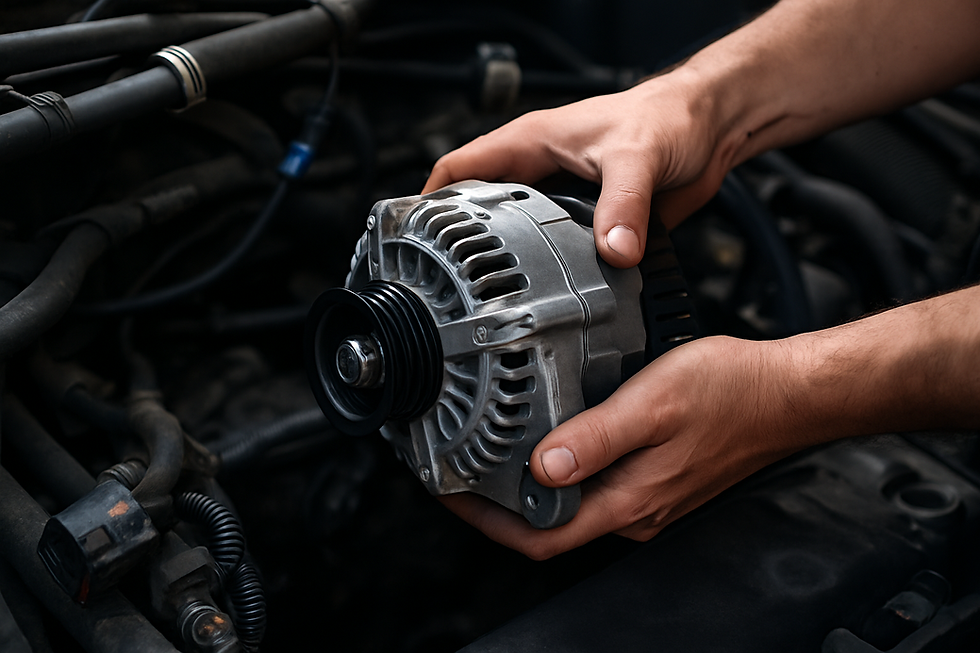
A car may seem useless, but up to 80% of its components are still valid and reusable: engines, alternators, transmissions, headlights, rearview mirrors, control units... everything is dismantled, sorted, and inspected for a possible second life.
Thanks to this, hundreds of thousands of tons of mechanical waste are avoided each year, which would otherwise end up in landfills, polluting the soil and water.
What is the real impact of manufacturing a new part?
Producing a new part is not a neutral process. It requires raw materials (such as steel, aluminum, copper, or plastics), energy consumption, transportation, and industrial processing. All of this generates a considerable ecological footprint.
For example:
The production of a new gearbox can generate up to 180 kg of CO₂
A new alternator may involve mining aluminum and copper at high energy costs.
Many parts are manufactured in Asia and must travel thousands of kilometers by ship or truck to reach the final consumer.
On the other hand, when you reuse an existing spare part, you avoid that entire process. By simply reconditioning, testing, and shipping it locally, your footprint is reduced by up to 75%.
Expart figures: each piece, a small, big change
Since we launched Expart, we've set out to not only help our customers find the right spare part, but also to actively contribute to a more circular and conscious model.
Our data speaks for itself:
♻️ More than 150 pieces successfully reused
🌱 More than 1,200 kg of waste avoided
🚚 Average 75% reduction in CO₂ emissions per order
🛠️ Hundreds of hours of useful life added to vehicles that deserved to keep running
And this is just the beginning.
Why isn't this talked about more?
Because traditional industry has a vested interest in you buying new. But more and more people understand that sustainability isn't just a fad, but a necessity. Reusing doesn't mean settling; it means optimizing, being smart, and conscious.
Furthermore, thanks to our collaboration with our CAT suppliers and internal quality controls, we can offer spare parts with a real guarantee, verified piece by piece, with complete transparency.
The future is circular (and more accessible than you think)
In a context of climate crisis, inflation, and raw material shortages, reusing is no longer just a logical option: it's a form of smart resistance. Every secondhand item you choose is a powerful gesture.
And you too can be part of this change.
At Expart, we're here to help you make the best choices—for your car and for the planet.
Contact us:
Web: www.expart.es
Email: info@expart.es
Wallapop: Expart Profile


Comments